



Show Jumpers For Sale

 |
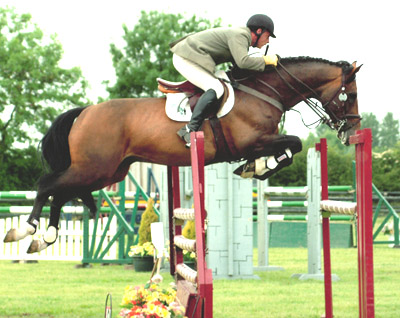
A leading producer of sport horses High Offley Stud is one of the UK`s have a selection of home bred competition horses for all equestrian sports, all our horses are bred to excel in show jumping, dressage and eventing with a selection of young horses with the finest pedigree`s we have a large sele....
Price: POA |
|
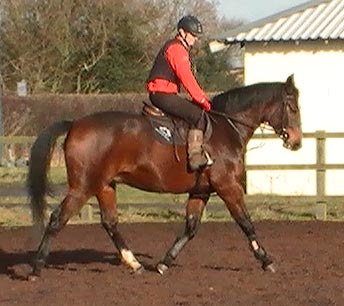
A leading producer of sport horses High Offley Stud is one of the UK`s have a selection of home bred competition horses for all equestrian sports, all our horses are bred to excel in show jumping, dressage and eventing with a selection of young horses with the finest pedigree`s we have a large sele....
Price: POA |
 |
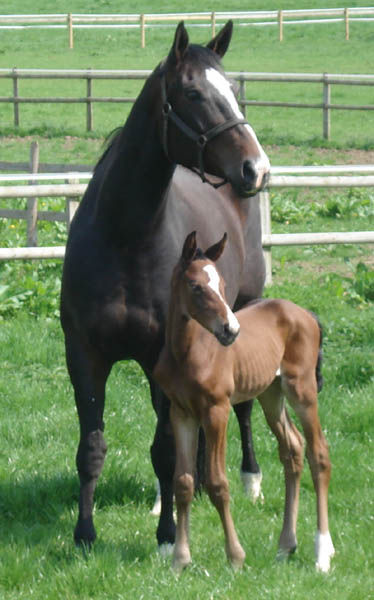
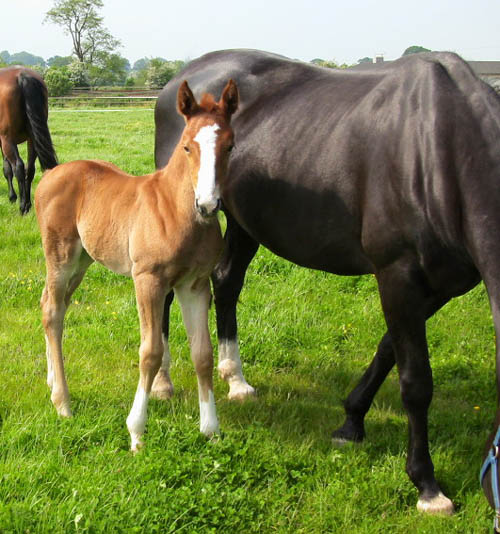
Holsteiner and Warmblood sporthorse foals and showjumpers for sale, High Offley Stud breed from proven competition horses to produce excellent performance horses for showjumping, dressage and eventing. High Offley Stud have an excellent record in producing sport horses and have many horses competing....
Price: POA |
|
A leading producer of sport horses High Offley Stud is one of the UK`s have a selection of home bred competition horses for all equestrian sports, all our horses are bred to excel in show jumping, dressage and eventing with a selection of young horses with the finest pedigree`s we have a large sele....
Price: POA |
|
A leading producer of sport horses High Offley Stud is one of the UK`s have a selection of home bred competition horses for all equestrian sports, all our horses are bred to excel in show jumping, dressage and eventing with a selection of young horses with the finest pedigree`s we have a large sele....
Price: POA |
Horses For Sale
Search the stable express equestrian classified to buy horses for sale.




Equestrian News - Showjumping
| Showjumper Voltaire Voltaire Showjumping Horse Competed by Marc Houtzager |
| Hh Radco - Showjumper Competed by French showjumper Kevin Staut |
| Caroline Bradley Wikipedia Caroline Bradley a legend of the showjumping world |
| William Funnell and Barry Bug Win HOYS leading showjumper of the year WILLIAM FUNNELL and Barry Bug achieved their biggest joint victory when completing the only clear round of an eight-horse jump-off to win last night's Traxdata Leading Show Jumper of t |
| Showjumper Ben Maher returns to form on Robin Hood W British showjumper Ben Maher and Robin Hood W continued their resurgence as a partnership by taking second place in the latest World Cup event in Zurich. German Marcus Ehning claimed a |
| My best jump ever was into a luxury ten-acre stables plot of my own, says showjumper Billy Twomey It's the dream of every young competitive horse rider to make enough money to own their own stables and horses, rather than ride other people's and live in a mobile home behind the barn |
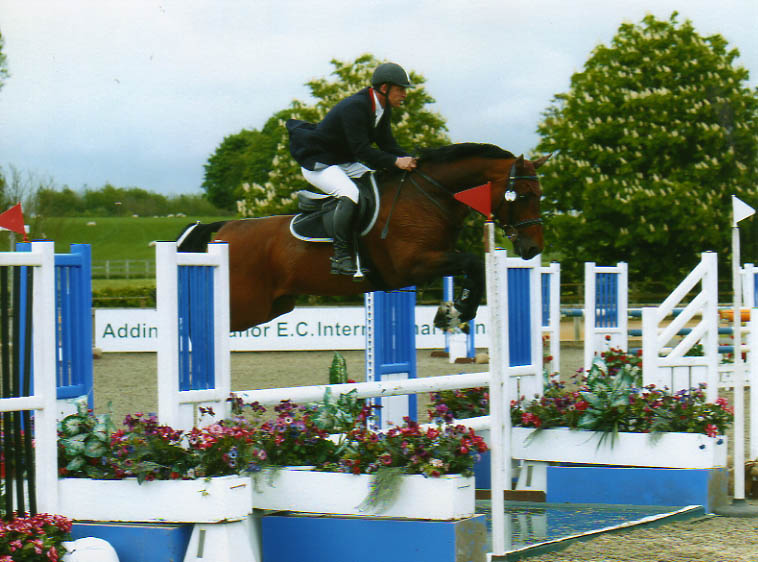
| High Offley Stud says goodbye to leading showjumper Barry Bug Horse Website - Rip Barry Bug - High Offley Stud have had some very sad news at the loss of international show jumper Barry Bug, Barry Bug was a great horse competed by all the greats i |
| Belgian Warmblood Showjumping Studs Belgium are a leading show jumping nation and has been home of many of the leading show jumping stallions and sport horses including Darco, Clinton, Carthago Z, Cumano Z, Zandor Z, Pri |
| Austrian Warmblood An Austrian Warmblood is a warmblood type of horse registered with the Arbeitsgemeinschaft für Warmblutzucht in Österreich (Association of Warmblood Breeding in Austria (AWÖ)). Although |
| Equistrian Singles Showjumping |
| Billy Twomey Triumphs in St. Gallen Billy Twomey triumphed in the CSIO 5 star Grand prix in St. Gallen, Switzerland on Sunday, riding Sue and Ed Davies's brilliant young stallion Je Taime Flamenco. With €200,000 on offe |
| Construction Of Equestrian Manege Get low cost quotes from leading companies offering manege construction |
| British Showjumping Open The British Open is an international show jumping event, The British Open was launched in 2003 at the Sheffield Hallam Arena and relocated in 2007 to a larger venue, The NEC, Birmingham |
| Long Riding Boots Long riding boots for men and women in many styles, sizes and fittings to suit almost any type of foot at superb low prices. Order Women's Riding Boots Today online with stableexpress |
| Roger-Yves Bost wins 1.45 m La Coruña Roger-Yves Bost won the 1.45m competition on the Spanish La Coruña today. The second place went to Daniel Deusser and Luca Maria Moneta was third. Roger Yves Bost is known as one of the |
| Colombian Dayro Arroyave wins 1.45 m Bonheiden The 1.45 m in Bonheiden yesterday won the Colombian Dayro Arroyave with Belgian horse Eldorado of Vijverhof . Patrik Spits was second. |
| Charlotte Bettendorf wins the Medium Tour of CH De Wolden The Medium Tour of CH De Wolden was won today in Luxembourg by Charlotte Bettendorf. The Dutch rider Annet Willems-Vos was third and was the best Dutch. Charlotte Bettendorf rode the ni |
| Abdullah Al Sharbatly wins in Ascona In the 1.40 m at Ascona Abdullah Al Sharbatly claimed victory with Andreas Ott in second. Wth the horse Exclusive (Emilion) Al Shartbatly won the 1.40m-section in 48.64 seconds. Andreas |
| Katrin Eckermann wins two 1.50-m classes at Muenster Katrin Eckermann won today in Muenster two 1.50-m sections, taking the top spot in the Brinkhoff`s No.. 1 grand prix with Nabab de Revel while also winning a class on the Medium Tour |
| Lance Whitehouse and Rhodos win the FEI 2* Keysoe International Grand Prix The sun shone on competitors at the inaugural International Show at The college, Keysoe in Bedfordshire yesterday and none more so than on Lance Whitehouse from Melton Mowbray. The 1.4 |
|
Equestrian Clothing - Equine Casual Wear - Riding Safety Wear - Horse Riding Clothes - Equestrian Footwear Tack - Saddles - Bridles - Horse Boots - Bits - Saddle Pads - Excercise Boots - Girths Accessories - Head Colors - Horse Grooming - Travel Boots - Rugs - Lead Ropes - Bandages Feed & Supplements - Horse Feed - Feed Suppliments - Hailage Gifts - Furniture - Pictures - Orniments - Video's & DvD's - Posters & Calenders - Toys |





Show Jumping
Show jumping ,also known as "stadium jumping" or "jumpers," is a member of a family of English riding equestrian events that also includes dressage, eventing, hunters and equitation. Jumping classes are commonly seen at horse shows throughout the world, including the Olympics. Sometimes shows are limited exclusively to jumpers, sometimes jumper classes are offered in conjunction with other English-style events, and sometimes show jumping is but one division of very large, all-breed competitions that include a very wide variety of disciplines. Jumping classes may be governed by various national horse show sanctioning organizations, such as the United States Equestrian Federation in the USA. However, international competitions are governed by the rules of the Fédération Équestre Internationale (FEI).
People unfamiliar with horse shows may be confused by the difference between working hunter classes and jumper classes. Hunters are judged subjectively on the degree to which they meet an ideal standard of manners, style, and way of going. Conversely, jumper classes are scored objectively based entirely on a numerical score determined only by whether the horse attempts the obstacle, clears it, and finishes the course in the allotted time. Jumper courses are often colorful and at times quite creatively designed. Jumper courses tend to be much more complex and technical than hunter courses, because riders and horses are not being judged on style. Hunters have meticulous turnout and tend toward very quiet, conservative horse tack and rider attire. Hunter bits, bridles, crops, spurs and martingales are tightly regulated. Jumpers, while caring for their horses and grooming them well, are not scored on turnout, are allowed a wider range of equipment, and riders may wear less conservative attire, so long as it stays within the rules. However, formal turnout is always preferred, and a neat rider gives a good impression at shows.
In addition to hunters and jumpers, there are equitation classes, sometimes called hunt seat equitation, which judge the ability of the rider. The equipment, clothing and fence styles used in equitation more closely resemble hunter classes, though the technical difficulty of the courses may more closely resemble jumping events.
Jumper classes are held over a course of show jumping obstacles, including verticals, spreads, double and triple combinations, usually with many turns and changes of direction. The purpose is to jump cleanly over a set course within an allotted time. Time faults are assessed for exceeding the time allowance. Jumping faults are incurred for knockdowns and blatant disobedience, such as refusals (when the horse stops before a fence or "runs out"). (see "Modern Rules" below) Horses are allowed a limited number of refusals before being disqualified. A refusal can also lead to a rider going over the time allowed on course. Placings are based on the lowest number of points or "faults" accumulated. A horse and rider who have not accumulated any jumping faults or penalty points are said to have scored a "clear round." Tied entries usually have a jump off over a raised and shortened course, and the course is timed; if entries are tied for faults accumulated in the jump-off, the fastest time wins.
In most competitions, riders are allowed to walk the course but not the jump-off course (usually the same course with missing jumps e.g. 1, 3, 5, 7, 8 in stead of 1, 2, 3, 4, 5, 6, 7, 8, 9) before competition to plan their ride. Walking the course is a chance for the rider to walk the lines he or she will actually ride, to decide how many strides the horse will need to take between each jump and at which angle. The more professional the competition, such as "A" rated shows in the United States, or the international "Grand Prix" circuit, the more technical the course. Not only is the height and sometimes width ("spread") of an obstacle increased to present a greater challenge, technical difficulty also increases with tight turns and shorter or unusual distances between fences. Horses sometimes also have to jump fences from an angle rather than straight-on. For example, a course designer might set up a line so that there are six and a half strides (the standard measure for a canter stride is 12 feet) between the jumps, requiring the rider to adjust the horse's stride dramatically in order to make the distance.
Unlike show hunter classes, which reward calmness and style, Jumper classes require boldness, scope, power, accuracy, and control; speed is also a factor, especially in jump-off courses and speed classes (when time counts even in the first round). A jumper must jump big, bravely, and fast, but he must also be careful and accurate to avoid knockdowns and must be balanced and rideable in order to rate and turn accurately. A show jumping rider must ride the best line to each fence, saving ground with well-planned turns and lines and must adjust the horse's stride for each fence and distance. In a jump-off, a rider must balance the need to go as fast as possible and turn as tight as possible against the horse's ability to jump cleanly.
Show jumping is a relatively new equestrian sport. Until the Inclosure Acts which came into force in England in the eighteenth century there had been little need for horses to routinely jump fences. But with this act of parliament came new challenges for those who followed fox hounds. The enclosures act brought fencing and boundaries to many parts of the country as common ground was dispersed amongst the wealthy landowners. This meant that those wishing to pursue their sport now needed horses which were capable of jumping these obstacles.
In the early shows held in France, there was a parade of competitors who then took off across country for the jumping. This sport was, however, not popular with spectators as they could not watch the jumping. Thus, it was not long before fences began to appear in the arena. This became known as Lepping. 1869 was the year ‘horse leaping’ came to prominence at Dublin horse show.[1] Fifteen years later, Lepping competitions were brought to Britain and by 1900 most of the more important shows had Lepping classes. Women, riding side-saddle, had their own classes.
At this time, the principal cavalry schools of Europe at Pinerolo and Tor-di-Quinto in Italy, the French school in Saumur and the Spanish school in Vienna all preferred to use a very deep seat with long stirrups when jumping. This style of riding was perhaps more secure for the rider, but it also impeded the freedom of the horse to use its body to the extent needed to clear large obstacles.
The Italian Instructor Captain Federico Caprilli heavily influenced the world of jumping with his ideas that a forward position with shorter stirrups would not impede the balance of the horse negotiating obstacles. This style, now known as the forward seat,is commonly used today. The deep, Dressage-style seat, while useful for riding on the flat and in conditions where control of the horse is of greater importance than freedom of movement, is sometimes referred to with disparagement as a "backward" seat in some jumping circles.
The first major show jumping competition held in England was at Olympia in 1907. Most of the competitors were members of the military and it became clear at this competition and in the subsequent years that there was no uniformity of rules for the sport. Judges marked on their own opinions. Some marked according to the severity of the obstacle and others marked according to style. Before 1907 there were no penalties for a refusal and the competitor was sometimes asked to miss the fence to please the spectators. The first courses were built with little imagination; many consisting of only a straight bar fence and a water jump. A meeting was arranged in 1923 which led to the formation of the BSJA in 1925. In the United States, a similar need for national rules for jumping and other equestrian activities led to the formation of the American Horse Shows Association in 1917, now known as the United States Equestrian Federation.
An early form of show jumping was first incorporated into the Olympic Games in 1900. Show jumping in its current format appeared in 1912, and has thrived ever since, its recent popularity due in part to its suitability as a spectator sport which can be viewed on television.
Show jumping competitors use a very forward style of English saddle, most often the "close contact" design, which has a forward flap and a seat and cantle that is flatter than saddles designed for general all-purpose English riding or dressage. This construction allows greater freedom of movement for the rider when in jumping position, and allows a shorter stirrup, required in order for a rider to allowing the rider to lighten his or her seat. Other saddles, such as those designed for dressage, are intended for riders with a deep seat, can hinder a rider over large fences, forcing them into a position that limits the horse's movement and may put the rider dangerously behind the movement of the horse.
At international levels, saddle pads are usually white and square in shape, allowing the pair to display a sponsorship, national flag, or breeding affiliation. (In contrast, riders in show hunters and equitation often use "fitted" fleece pads that are the same shape as the saddle.) Girths vary in type, but usually have a contour to give room for the horse's elbows, and many have belly guards to protect the underside of the horse from its shoe studs when the front legs are tightly folded under.
Bridles may be used with any style of cavesson noseband, and there are few rules regarding the severity of this equipment. The figure-8 cavesson is the most popular type. Bits may also vary in severity, and competitors may use any bit, or even a "bitless bridle" or a hackamore. However, the ground jury at the show has the right, based on veterinary advice, to refuse a bit or bridling scheme if it could cause harm to the horse.
Boots and/or wraps are worn by almost all horses, due to the fact that they may easily injure their legs when landing or when making tight turns at speed. Open-fronted tendon boots are usually worn on the forelegs, because they provide protection for the delicate tendons that run down the back of the leg, but still allow the horse to feel a rail should it get careless and hang its legs. Fetlock boots are sometimes seen on the rear legs, primarily to prevent the horse from hitting itself on tight turns.
Martingales are very common, especially on horses used at the Grand Prix level. The majority of jumpers are ridden in running martingales, as these provide the most freedom over fences. Although a standing martingale (a strap connecting directly to the horse's noseband) is commonly seen on show hunters and may be helpful in keeping a horse from throwing its head up, it can also be quite dangerous in the event of a stumble, restricting a horse from using its head to regain its balance. For this reason, standing martingales are not used in show jumping or eventing. Breastplates are also common, used to keep the saddle in place as the horse goes over large fences.
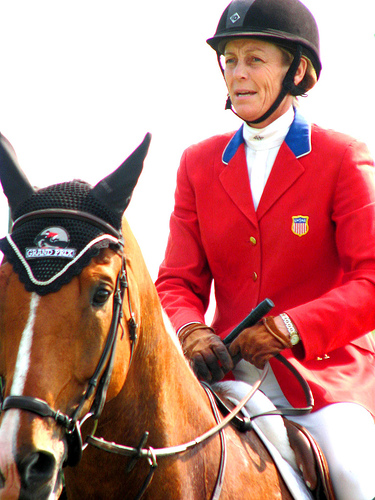
Rider attire may be somewhat less formal than that used in hunter riding. However, an approved ASTM/SEI equestrian helmet with a harness is always required, and is a practical necessity to protect the rider's head in the event of a fall. Tall boots are required, usually black. Spurs are optional, but commonly used. Breeches are traditional in color, usually white, tan, or beige. At approved competitions, depending on sanctioning organization, a dark-colored coat is usually worn (though under the rules of the USEF tweed or wash jackets are allowed in the summer and lighter colors are currently in fashion), with a light-colored (usually white) ratcatcher-style shirt and either a choker or stock tie. However, especially in the summer, many riders wear a simple short-sleeved "polo" style shirt with helmet, boots and breeches, and even where coats are required, the judges may waive the coat rule in extremely hot weather. Gloves, usually black, are optional, as is braiding of the horse. At FEI Grand Prix levels, tradition is very strong and riders dress in a more formal manner. White shirts and breeches are worn with black boots. Members of some national teams, including the United States, may be seen in red jackets, a color reserved for only riders of the Grand Prix level; otherwise international competitors usually wear a dark navy jacket, sometimes with national insignia added
- Grand Prix: the highest level of show jumping. Run under International Federation for Equestrian Sports (FEI) rules, the horse jumps a course of 10 to 16 obstacles, with heights and spreads of up to 6.5 feet (2.0 m). Grand Prix-level show jumping competitions include the Olympics, the World Equestrian Games and the Samsung Super League series. Grand Prix showjumping is normally referred to collectively as five-star Concours de Saut International (CSI) rules.
- Speed derby
- Puissance: a high-jump competition, where the final wall may reach over 7 feet tall.
- Six-bar: riders jump six fences set in a straight line. In most places, fences are placed at equal distances apart, the first fence is the lowest and each subsequent fence is higher than the one before. Horses are either penalized or eliminated from competition if they knock down a rail. After each round where more than one competitor goes "clean," or is tied for fewest faults, the six fences are raised in height each subsequent round until there is a winner. Occasionally, if there are multiple jump-offs, the final fences can be raised to well over 6 feet.
- Gambler's choice/accumulator: An event where exhibitors choose their own course, with each fence cleared worth a given amount of points based on difficulty. The entry who accumulates the most points within a set time limit on course is the winner.
- Calcutta: A jumping event where spectators bet on which horse will win by means of an auction where the highest bidder has the exclusive bet on a given horse. Though the exact mechanism varies by region and culture, as a rule, the spectator who bets on the winner collects all money bet and then splits the purse with the owner of the winning horse.
- Maiden, novice and limit: Jumping classes limited to horses with fewer than one, three or six wins. Fences are usually lower and time limits more generous.
- Match race or double slalom: two identical courses are set up in a split arena, and two horses race over the courses.
- Touch class: A class held much like a normal showjumping class, except that if the horse touches the jump it is considered four faults.
- Faults converted: A class in which any faults are converted into seconds on the clock, usually at the rate of 1 second per fault (i.e. one rail = 4 seconds)
Equestrian Directory
If your are looking for an equestrian business search our online equine directory with 1000's of businesses from around the world we can help you find equine businesses & services what ever your needs.
If you are own or run an equestrian business you can add your company into the equine directory FREE. Stable Express is a leading equestrian website getting thousands of unique visitors each month.